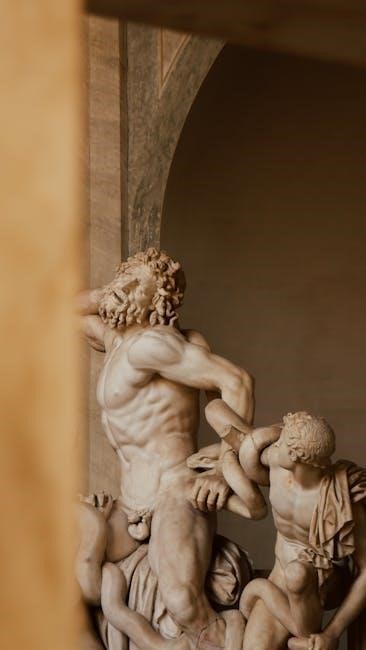
Perseus and Medusa: A Comprehensive Overview
Perseus‚ son of Zeus‚ famously slew Medusa‚ a Gorgon with a petrifying gaze‚ aided by divine gifts and courage; his tale is a cornerstone of Greek mythology.
The Mythological Context
Perseus and Medusa’s story resides within the rich tapestry of Greek mythology‚ a world populated by powerful gods‚ monstrous creatures‚ and heroic demigods. This narrative isn’t simply a tale of bravery‚ but a demonstration of divine intervention and the consequences of hubris. The myth explores themes of fate‚ destiny‚ and the complex relationships between mortals and immortals.
Medusa‚ originally a beautiful priestess of Athena‚ suffered a terrible fate‚ transformed into a monstrous Gorgon as punishment. Perseus’ lineage‚ being the son of Zeus‚ immediately places him within a sphere of divine influence‚ setting the stage for a quest ordained by the gods themselves. Understanding this context is crucial to appreciating the story’s deeper meanings.
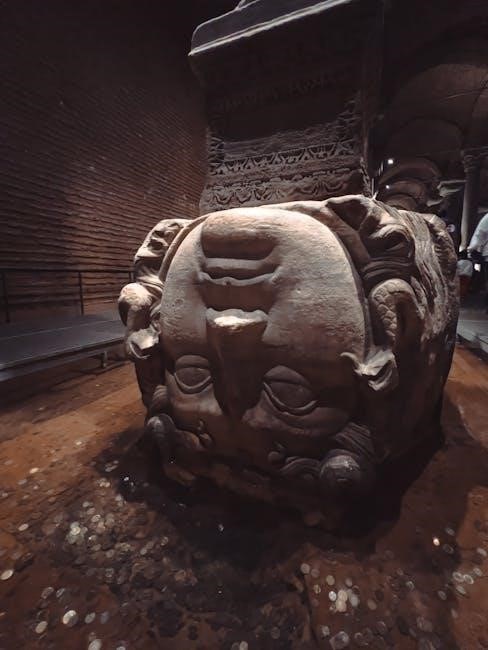
The Origins of Perseus
Perseus‚ a hero of Argos‚ was conceived through Zeus’ divine intervention with Danaë‚ escaping a prophecy foretelling her son’s power and destiny.
Perseus’ Divine Parentage
Perseus’ birth is steeped in divine intervention‚ a direct result of Zeus‚ the king of the gods‚ taking a mortal form to visit Danaë‚ the daughter of King Acrisius of Argos. Acrisius‚ warned by an oracle that his grandson would bring about his demise‚ imprisoned Danaë. However‚ Zeus‚ captivated by her beauty‚ transformed into a shower of golden rain to reach her.
This union resulted in Perseus’ conception‚ marking him as a demigod—a hero with both mortal and divine lineage. Acrisius‚ upon learning of Perseus’ birth‚ didn’t dare kill him directly‚ fearing divine retribution‚ and instead cast Danaë and the infant Perseus adrift at sea in a wooden chest‚ leaving their fate to the waves.
Early Life and Prophecy
Cast adrift‚ Danaë and Perseus miraculously survived‚ landing on the island of Seriphos‚ where they were rescued by Dictys‚ a kind fisherman and brother of King Polydectes. Perseus grew into a strong and courageous young man‚ unaware of his true parentage and the prophecy looming over his grandfather‚ Acrisius.
Polydectes‚ however‚ harbored desires for Danaë and saw Perseus as an obstacle. He devised a cunning plan‚ feigning a desire to marry Danaë but demanding a gift first: the head of Medusa‚ a monstrous Gorgon whose gaze turned men to stone. This seemingly impossible task was a thinly veiled attempt to rid himself of Perseus.
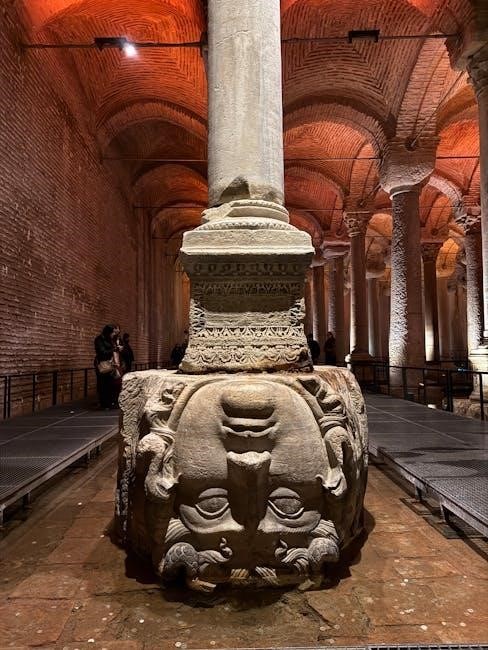
The Tale of Medusa
Medusa‚ once beautiful‚ was transformed into a monstrous Gorgon with venomous snakes for hair‚ capable of turning anyone who gazed upon her to stone.
Medusa’s History and Transformation
Medusa’s story begins not as a monster‚ but as a priestess of Athena‚ renowned for her exceptional beauty. However‚ she suffered a horrific fate due to the actions of Poseidon‚ who assaulted her within Athena’s temple. Enraged by this desecration‚ Athena did not punish Poseidon‚ but instead transformed Medusa into a terrifying Gorgon.
Her once-lovely hair became writhing snakes‚ and her gaze gained the power to turn living beings to stone. This transformation served as a permanent and brutal punishment for a violation she did not initiate‚ forever altering her existence and solidifying her place as a figure of fear and tragedy in Greek mythology.
The Gorgons: Sisters of Medusa
Medusa was one of three monstrous Gorgon sisters‚ Stheno and Euryale being the other two. Unlike Medusa‚ her sisters were immortal‚ retaining their terrifying features – snake-filled hair‚ bronze hands‚ and piercing gazes – throughout eternity. They dwelled at the edge of the world‚ a desolate and frightening realm‚ guarding the entrance to the Underworld.
The Gorgons were known for their fearsome appearance and the power to petrify anyone who dared to meet their eyes. Their very presence inspired terror‚ and they represented a primal fear of the monstrous feminine‚ embodying a dangerous and untamed power.
Medusa’s Petrifying Gaze
Medusa’s most infamous attribute was her gaze‚ capable of turning any living creature to stone. A single glance meant instant‚ irreversible petrification‚ freezing victims in terror for all time. This power stemmed from her monstrous transformation‚ a curse inflicted upon her by Athena‚ turning her beautiful hair into venomous snakes.
The gaze wasn’t merely visual; it represented a potent‚ paralyzing fear. It symbolized the dangers of looking upon the forbidden‚ the consequences of challenging the gods‚ and the destructive power of female rage. Even after her death‚ the severed head retained this deadly ability.
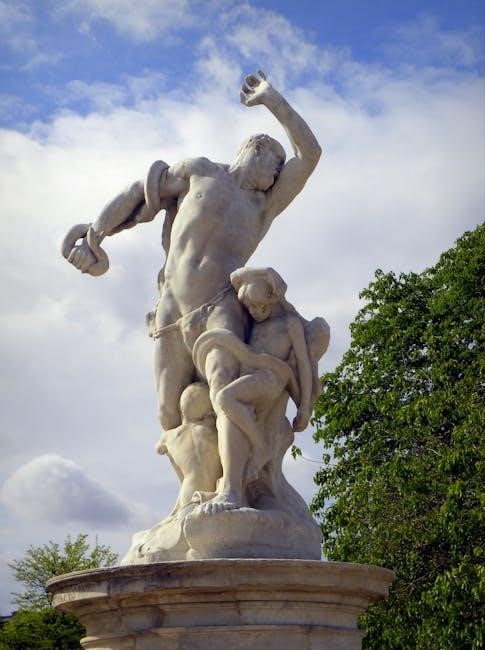
The Quest to Slay Medusa
Polydectes tasked Perseus with retrieving Medusa’s head‚ a seemingly impossible feat‚ intending to eliminate the hero through a perilous mission.
The Challenge from Polydectes
Polydectes‚ the king of Seriphos‚ desired to marry Perseus’ mother‚ Danaë‚ but Perseus stood in his way. To circumvent this obstacle‚ Polydectes devised a cunning plan‚ publicly requesting a gift from each of his court‚ and specifically demanding Perseus bring him the head of Medusa – a task considered suicidal.
This request wasn’t born of genuine need‚ but malicious intent; Polydectes believed the quest would inevitably lead to Perseus’ death‚ clearing the path for him to marry Danaë. He subtly pressured Perseus‚ knowing the monstrous Gorgon’s gaze could turn anyone to stone‚ making the mission appear hopeless and ensuring the hero’s likely demise.
Divine Assistance: Athena and Hermes
Recognizing the impossible nature of Polydectes’ demand‚ Perseus received crucial aid from Athena and Hermes. Athena‚ goddess of wisdom and warfare‚ provided a polished shield‚ allowing Perseus to view Medusa’s reflection without being petrified. Hermes‚ the messenger god‚ gifted him winged sandals for swift travel and a kibisis – a magical bag to safely contain Medusa’s head.
These divine gifts weren’t simply tools‚ but symbols of the gods’ favor and belief in Perseus’ potential. Athena’s strategic aid and Hermes’ mobility were essential for navigating the perilous journey and ultimately succeeding against the monstrous Gorgon‚ highlighting the importance of divine intervention.
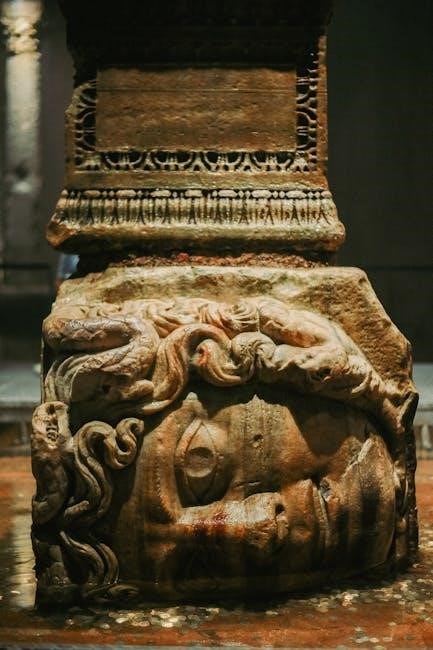
Tools and Allies for Perseus
Perseus received divine assistance: Athena’s shield‚ Hermes’ sandals and kibisis‚ enabling him to confront Medusa and complete his dangerous‚ heroic quest.
The Kibisis: A Magical Bag
Hermes gifted Perseus with a kibisis‚ a magical bag possessing the remarkable ability to expand infinitely in size while retaining a negligible weight. This proved crucial for safely containing Medusa’s severed head‚ preventing its gaze from turning anyone to stone. The bag’s unique properties ensured the head remained secured during Perseus’ journey home‚ safeguarding him and others from its deadly power. It wasn’t merely a container‚ but a vital component of his success‚ allowing him to transport the monstrous head without incident. The kibisis represents cleverness and foresight‚ essential tools alongside divine aid in overcoming seemingly impossible challenges.
The Shield of Athena
Athena‚ the goddess of wisdom and strategic warfare‚ provided Perseus with a highly polished shield‚ not for defense against physical attacks‚ but as a mirror. This wasn’t a typical shield; its reflective surface allowed Perseus to view Medusa’s terrifying visage indirectly. By observing her reflection‚ he could avoid direct eye contact‚ thus preventing himself from being instantly petrified by her infamous gaze. The shield served as a crucial tool‚ enabling him to approach and ultimately decapitate the Gorgon safely. It symbolizes intellect triumphing over brute force and the power of indirect action.
The Sandals of Hermes
Hermes‚ the swift-footed messenger god‚ gifted Perseus with winged sandals‚ granting him the ability of flight. These weren’t merely for soaring through the air; they provided incredible speed and agility‚ essential for navigating the treacherous journey to Medusa’s lair and escaping the wrath of her sisters. The sandals allowed Perseus to traverse vast distances quickly and efficiently‚ bypassing obstacles and enemies. This divine assistance underscored the importance of speed and resourcefulness in overcoming seemingly insurmountable challenges. They represent freedom‚ swiftness‚ and the aid of a benevolent deity.
The Graeae Encounter
Perseus sought the Graeae‚ ancient sisters who shared one eye and one tooth‚ to locate Medusa’s lair‚ cleverly stealing their eye for information.
Locating the Graeae
Perseus‚ guided by Athena and Hermes‚ embarked on a crucial step in his quest: finding the Graeae. These ancient sisters – Pemphredo‚ Enyo‚ and Deino – possessed knowledge of Medusa’s hidden lair‚ but were notoriously difficult to approach. They shared a single eye and a single tooth‚ passing them between each other.
Hermes directed Perseus to their remote dwelling‚ a desolate place at the edge of the world. The hero patiently waited‚ concealed‚ observing their peculiar habit. Knowing their dependency on the shared eye and tooth was his advantage‚ Perseus prepared to exploit it‚ understanding this encounter was vital to his success against the Gorgon;
Extracting Information from the Graeae
Perseus swiftly intervened as the Graeae passed their shared eye and tooth. He seized both‚ holding them hostage‚ and demanded information about the path to Medusa. The Graeae‚ desperate and distressed‚ pleaded for their eye and tooth back‚ promising to reveal the location of the Gorgons’ lair.
Reluctantly‚ they divulged the route‚ describing the perilous landscape and the surrounding nymphs. Perseus‚ maintaining his firm grip‚ pressed them for details about the Gorgons themselves and how to approach Medusa safely. Only after receiving precise directions did he return their eye and tooth‚ allowing him to continue his dangerous quest.
Confronting Medusa
Perseus‚ guided by Athena’s shield as a mirror‚ approached Medusa‚ avoiding her gaze‚ and skillfully decapitated the Gorgon in her lair.
Navigating the Gorgon’s Lair
Perseus cautiously entered the Gorgons’ desolate lair‚ a terrifying landscape littered with statues—the remnants of those who dared meet Medusa’s gaze. He relied heavily on Athena’s polished shield‚ using its reflective surface to locate Medusa without direct eye contact‚ a crucial tactic for survival. The lair was described as being at the edge of the world‚ a dark and forbidding place. Avoiding the stares of Medusa’s sisters proved challenging‚ requiring stealth and precision. He moved silently‚ aware that a single glance could mean instant petrification‚ transforming him into another stone monument within the horrifying garden.
The Decapitation of Medusa
Perseus‚ guided by the reflection in Athena’s shield‚ swiftly approached the sleeping Medusa. With a precise strike using a diamond-edged sickle provided by Hermes‚ he severed her head. The act wasn’t one of simple brute force‚ but calculated precision to avoid her gaze even in death. From Medusa’s severed neck sprang Pegasus‚ the winged horse‚ and Chrysaor‚ a giant born fully formed. This dramatic birth occurred simultaneously with the decapitation‚ adding to the myth’s fantastical elements. Perseus quickly secured Medusa’s head within the Kibisis‚ a magical bag‚ to preserve its power.
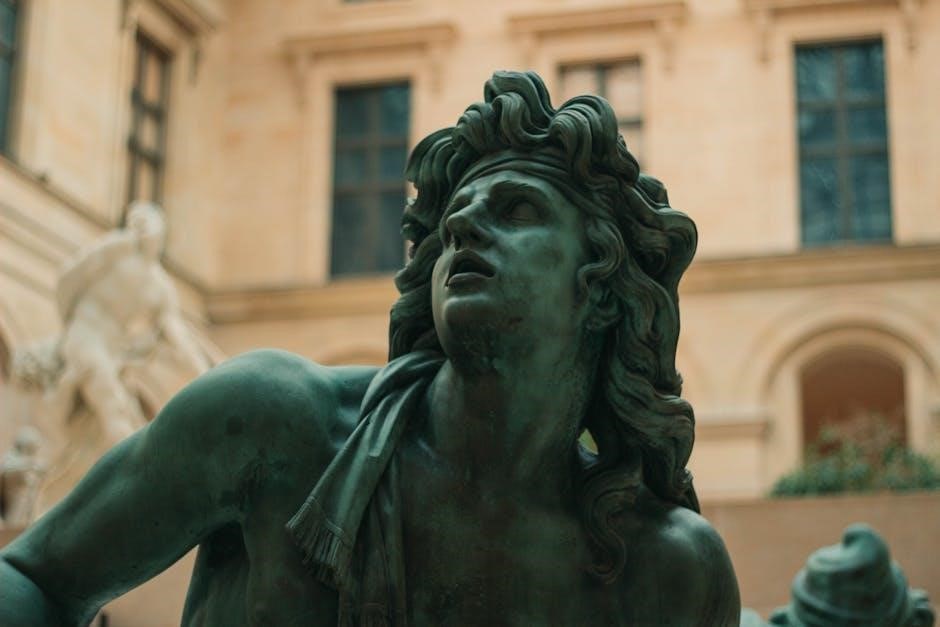
The Aftermath of Medusa’s Death
Medusa’s demise birthed Pegasus and Chrysaor‚ while her head retained its petrifying power‚ becoming a potent weapon wielded by Perseus in further adventures.
The Birth of Pegasus
Pegasus‚ the magnificent winged horse‚ sprang forth from the severed neck of Medusa at the moment of her death‚ a truly remarkable and divine birth. Born alongside the golden warrior Chrysaor‚ Pegasus’s origin is directly linked to the blood of the Gorgon.
The name Pegasus itself is derived from the Greek word “pegae‚” meaning springs or wells‚ referencing his birth near a source of fresh water. Unlike his brother‚ Pegasus was immortal‚ a gift from his unique parentage. He quickly ascended to the heavens‚ becoming a favored steed of the Gods‚ and eventually serving Bellerophon in his heroic quests.
The Rise of Chrysaor
Chrysaor‚ a golden warrior‚ emerged simultaneously with Pegasus from the slain Medusa’s neck‚ a testament to the potent magic surrounding her death. His name‚ meaning “golden one‚” reflects his radiant appearance and divine origins. Unlike his immortal brother‚ Chrysaor was a mortal hero‚ though blessed with exceptional strength and skill.
He quickly became the husband of Callirrhoe‚ an Oceanid nymph‚ and together they fathered Geryon‚ a monstrous giant later slain by Heracles. Chrysaor’s story‚ though less prominent than Pegasus’‚ highlights the lasting impact of Perseus’s deed and the powerful beings born from the Gorgon’s demise.
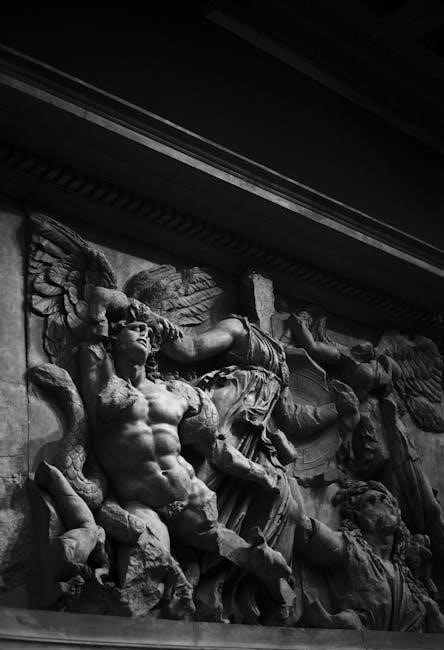
Perseus’ Further Adventures
Perseus‚ after defeating Medusa‚ heroically rescued Andromeda from a sea monster and founded the powerful city of Mycenae‚ solidifying his legendary status.
Rescuing Andromeda
Perseus‚ while journeying onward‚ encountered Andromeda‚ a princess chained to a rock as a sacrifice to a fearsome sea monster sent by Poseidon. Her parents‚ Cepheus and Cassiopeia‚ incurred the god’s wrath due to Cassiopeia’s boastful claim of surpassing the Nereids in beauty.
Perseus‚ captivated by Andromeda’s beauty‚ swiftly intervened‚ slaying the monster with his sword and freeing the princess from her perilous fate. This act of bravery and compassion led to their marriage‚ and Andromeda accompanied Perseus on his return to Argos‚ becoming a celebrated figure in Greek legend alongside the hero.
Founding Mycenae
Upon returning to his homeland‚ Perseus faced political turmoil; his stepfather‚ Polydectes‚ still sought to eliminate him. To avoid conflict‚ Perseus gifted the Kibisis‚ containing Medusa’s head‚ to Athena‚ and the sandals and shield to Hermes‚ returning their divine assistance;
He then journeyed to Argos and‚ through a fortunate turn of events‚ became king. Perseus is credited with founding the powerful city of Mycenae‚ establishing a dynasty that would flourish for generations. Mycenae became a significant center of Greek civilization‚ renowned for its impressive architecture and warrior culture‚ forever linked to the heroic legacy of Perseus.
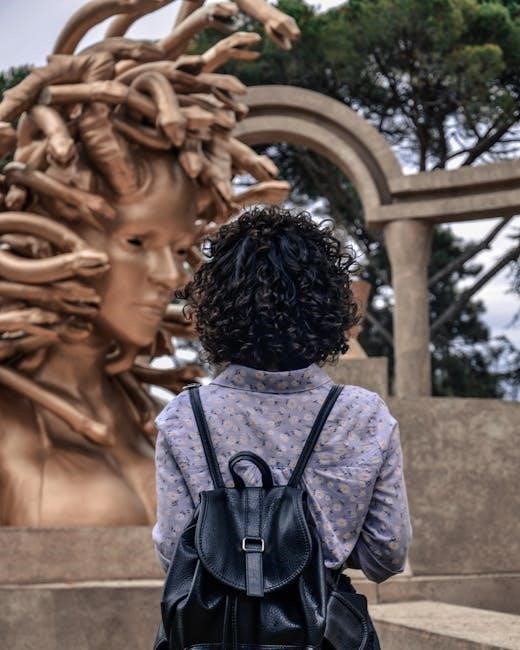
The Role of the Gods
Athena and Zeus actively aided Perseus‚ providing crucial tools and protection throughout his perilous quest to defeat the monstrous Medusa.
Athena’s Guidance
Athena played a pivotal role in Perseus’ success‚ motivated by Medusa’s prior defilement of her temple. She provided Perseus with a polished shield‚ enabling him to view Medusa’s reflection and avoid her paralyzing gaze during the dangerous confrontation.
Furthermore‚ Athena offered strategic advice and guidance‚ assisting Perseus in navigating the challenges of his quest. Her wisdom proved invaluable in locating the Graeae and obtaining crucial information regarding Medusa’s lair. Athena’s support wasn’t merely logistical; it represented divine endorsement of a hero’s righteous mission against a monstrous threat.
Zeus’ Protection
As Perseus’ father‚ Zeus offered crucial‚ though indirect‚ protection throughout the hero’s perilous quest. While unable to directly intervene due to divine laws‚ Zeus ensured Perseus possessed the inherent strength and courage needed to face Medusa and overcome numerous obstacles.
His divine lineage granted Perseus a degree of favor and resilience. Zeus’ influence subtly aided Perseus‚ ensuring opportune encounters with helpful deities like Athena and Hermes. This paternal support‚ though veiled‚ was fundamental to Perseus’ ultimate triumph‚ solidifying his status as a legendary hero.
Hecate’s Connection to the Myth
Hecate‚ a powerful goddess associated with magic‚ witchcraft‚ and the Underworld‚ holds a subtle yet significant connection to the myth of Perseus and Medusa. Often depicted as a shadowy figure‚ Hecate’s domain extended to crossroads and liminal spaces‚ mirroring the dangerous journey Perseus undertook.
While not directly assisting Perseus‚ Hecate’s presence underscores the myth’s darker‚ more mystical elements. Some interpretations suggest Medusa herself was once a devotee of Hecate‚ adding layers to her tragic transformation. Hecate’s association with the monstrous and the hidden highlights the myth’s exploration of fear and the unknown.
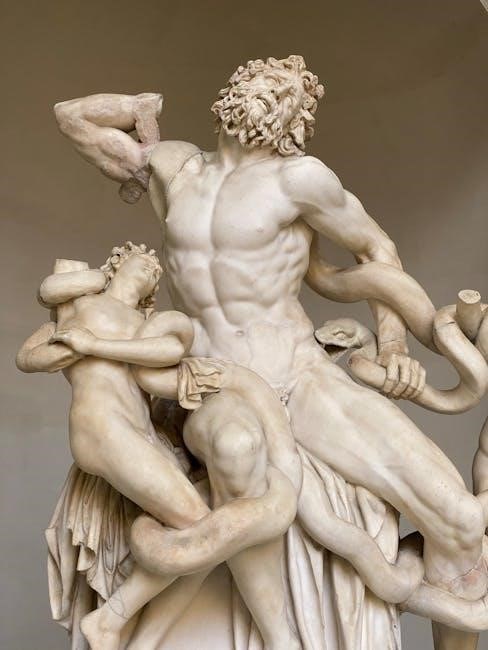
Interpretations and Symbolism
Medusa embodies female rage and punishment‚ while Perseus represents the heroic overcoming of obstacles; the myth explores themes of power‚ fear‚ and transformation.
Medusa as a Symbol of Female Rage
Medusa’s monstrous depiction increasingly resonates as a symbol of female rage‚ born from a history of patriarchal silencing and violation. Originally a beautiful priestess of Athena‚ her transformation into a Gorgon‚ cursed with snakes for hair and a petrifying gaze‚ is often reinterpreted as punishment for a sexual assault by Poseidon within Athena’s temple.
This reframing shifts the narrative‚ portraying Medusa not as a monstrous threat‚ but as a victim whose anger and defense mechanisms were demonized. Her gaze‚ once solely destructive‚ becomes a powerful act of self-protection against unwanted advances. Modern feminist interpretations reclaim Medusa‚ celebrating her as an icon of resistance against male aggression and societal oppression‚ challenging traditional heroic narratives.
Perseus as a Heroic Archetype
Perseus embodies the classic heroic archetype‚ demonstrating courage‚ resourcefulness‚ and divine favor in overcoming seemingly insurmountable obstacles. His quest to slay Medusa showcases the traditional hero’s journey: receiving a call to adventure‚ facing trials‚ receiving aid from supernatural forces – Athena and Hermes – and ultimately achieving victory through skill and bravery.
He represents the triumph of order over chaos‚ courage over fear‚ and civilization over the monstrous. Perseus’ success isn’t solely based on strength‚ but on cleverness and utilizing the tools provided. He exemplifies the ideal of a young man proving his worth through a dangerous undertaking‚ solidifying his place among legendary Greek heroes.
Perseus and Medusa in Art and Literature
Perseus and Medusa’s story has inspired countless artistic depictions and literary adaptations‚ from classical sculptures to modern interpretations‚ showcasing enduring fascination.
Classical Depictions
Classical art frequently portrays the dramatic climax of Perseus’ quest: the decapitation of Medusa. Sculptures‚ like Benvenuto Cellini’s bronze masterpiece‚ vividly capture the hero’s strength and the gruesome moment of victory. Ancient vase paintings also illustrate the tale‚ often focusing on Perseus’ use of Athena’s shield as a mirror to avoid Medusa’s petrifying gaze. These depictions emphasize the heroic aspect of the myth‚ showcasing Perseus as a courageous warrior overcoming a monstrous threat. Roman mosaics further demonstrate the story’s popularity‚ often including details like the birth of Pegasus and Chrysaor from Medusa’s severed neck. These artistic representations solidified the myth’s place in ancient culture‚ influencing subsequent interpretations for centuries.
Modern Representations
Modern interpretations of the Perseus and Medusa myth often subvert traditional narratives‚ re-examining Medusa’s character. Contemporary art frequently portrays her as a victim of patriarchal violence‚ reclaiming her story from a feminist perspective. Films like “Clash of the Titans” and “Wrath of the Titans” offer blockbuster adaptations‚ though often prioritizing spectacle over nuanced character development. Literature continues to explore the myth’s themes‚ with authors reimagining Medusa’s backstory and motivations. Furthermore‚ Medusa has become a potent symbol in popular culture‚ representing female rage and empowerment. These modern depictions demonstrate the enduring power of the myth and its capacity for reinterpretation.
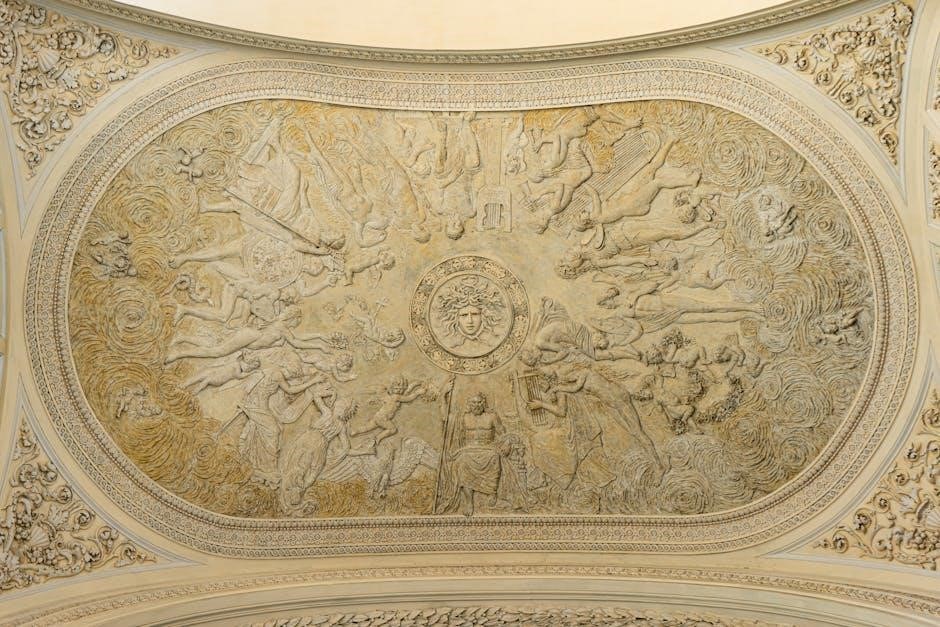
The Perseus Constellation
Perseus is an ancient constellation named after the hero‚ visible in the northern sky; it commemorates his legendary deeds‚ including slaying Medusa;
Historical Significance
Perseus’s depiction in the stars dates back to ancient times‚ recognized by Ptolemy‚ solidifying its place in astronomical records. Throughout history‚ cultures connected the constellation to the heroic myth‚ viewing it as a celestial representation of Perseus’s bravery and triumph over Medusa.
Sailors utilized Perseus for navigation‚ its position marking seasonal changes and guiding voyages across vast oceans. The constellation’s visibility also inspired storytelling and artistic expression‚ appearing in numerous works of art and literature. Its enduring presence reflects the lasting impact of Greek mythology on human culture and scientific observation.
Astronomical Location
The Perseus constellation resides in the northern sky‚ best viewed during autumn and winter months. It’s positioned near constellations like Cassiopeia‚ Andromeda‚ and Auriga‚ forming a recognizable asterism. Its coordinates place it between right ascension 2h 30m and 4h 30m‚ and declination +30° to +50°.
Within Perseus lies the famous variable star Algol (Beta Persei)‚ known for its periodic dimming. The constellation also contains several open star clusters‚ like M45‚ visible with binoculars. Observing Perseus offers a glimpse into deep-sky objects and celestial phenomena‚ connecting ancient mythology with modern astronomy.